

Robert Musante's CLE Seminars
The 4 BEST cross-examination seminars ... EVER!

GREAT! Adverse Depositions:
Principles & Principal Techniques

&
Mastering the Toughest-to-Craft
Credibility Arguments

Two Stand-Alone Seminars

CLE Accreditation Information

GREAT! Adverse Depositions:
Principles & Principal Techniques

(2-hr., 4-hr., & 6.5-hr. Presentations)

Mastering the Toughest-to-Craft
Credibility Arguments

(4-hr. & 6.5-hr. Presentations)


High-quality adverse depositions require the conscious and conscientious application of the integrated set of logical cross-examination rules. This seminar wastes no time on entry-level wisdom, code chatter, idiosyncratic war stories, or tired maxims. Instead, it teaches how to take adverse depositions as never before ... the one, right, logical way ... as an intellectually rigorous discipline.

(See 1000's of rave reviews from litigators across the country.)

* * * * * * * * * * *

The 6.5-hr. Agenda:

8:30 a.m. - 10:00 a.m.


• Deposition cross-examination: an intellectually rigorous discipline
Battleships: the checklist of recurring depositions questions for recurring issues.
• Four everybody-agrees deposition cross-examination rules.
Grand Unified Theory of civil litigation.
• Rationale re saving attacks for surprise at trial.
Whack! defined and demonstrated.
• Five advantages: deposition cross-examiner vs. trial cross-examiner.
• A famous cross-examination analyzed.
• Introduction of The Magnificent Seven.
• When to ask leading questions in deposition.


10:00 a.m. - 10:10 a.m. BREAK

10:10 a.m. - 11:20 a.m.


• Psychology and efficiency exceptions to the leading question rule.
• When the truth is not nearly enough.
• Bluffing deponent into an admission.
• Deponent's escapes from answers to leading questions.
• A 2nd famous cross-examination analyzed.
• Reasoning questions.
Firewalling introduced.
Interrogatory-like questions.


11:20 a.m. - 11:30 a.m. BREAK


11:30 a.m. - 12:30 p.m.

Universal questions and the limbo bar.
• A 3rd famous cross-examination analyzed.
• Enumeration.
• Looping.
• Identifying a mediocre deposition in only 60 seconds.
• Making the implied express: using lexicography.

12:30 p.m. - 1:30 p.m. LUNCH

1:30 p.m. - 2:50 p.m.

• Making the implied express: using logic.
• The transfer of information rule and the most common stupid deposition question.
• Crap defined.
• Attacking the narrow question & question-dodging with high school grammar.
• Attacking 2 answers in 1 question.

2:50 p.m. - 3:00 p.m. BREAK

3:00 p.m. - 4:30 p.m.


• More re the sacred orthodoxy of saving attacks for surprise at trial.
• The whole nine yards question.
• The limited escapes from the lie impeachment.
• Conducting interviews vs. taking great adverse depositions (and a test).
• Coda.

4:30 p.m. ADJOURN


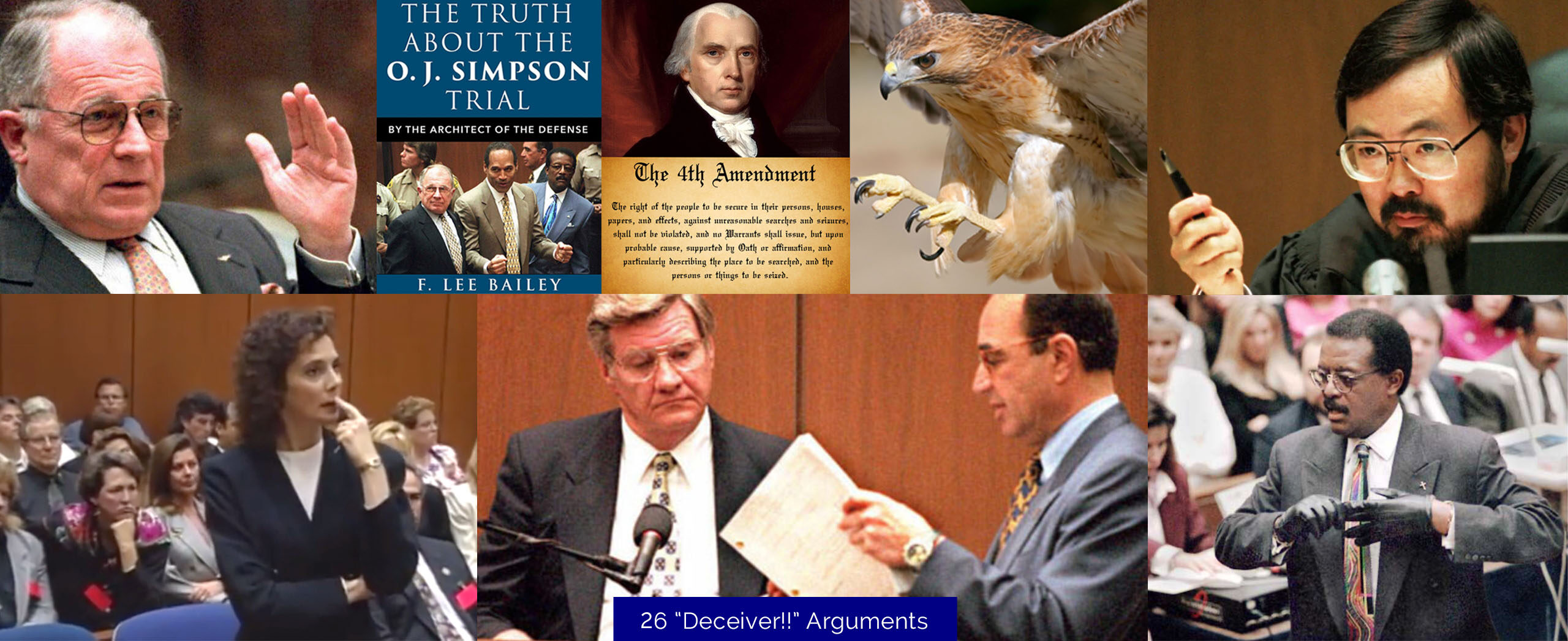
Based on the logic that trial is argument, deposition is trial, and deposition is argument, there is no such thing as a “discovery” deposition. ALL depositions are trial depositions. In EVERY adverse deposition, cross-examiner's central goal is to craft credibility arguments that settle cases or win trials. The focus of this seminar is a uniquely valuable –and entertaining– analysis of the most-difficult-to-master credibility arguments: The Un-Reasonables, which are vital to the execution of great adverse depositions or great trial cross-examinations.
* * * * * * * * * * *

The 6.5-hr. Agenda:

8:30 a.m. - 10:00 a.m.


•Credibility, the every-case argument: deception vs. error.
•Argument: Consider the source.
•Deposition: cross-examiner's laboratory.
•Seminar's dramatis personae introduced.
Four no-major-talent-required arguments:
   –Inconsistent statements;
   –Ability to see/hear flawed;
   –Motive to deceive;
   –Rebutted by information external to witness.
•Three pressure-point arguments:
   –Engaged in unreasonable question-dodging;
   –Unreasonably overstated/understated the truth;
   –Flunked the good citizenship (values) test
•Deposition admonitions: the right ones, and their rationale.
•Axiom to The Un-Reasonables proffered.
•World-famous cross-examination analyzed.

10:00 a.m. - 10:10 a.m. BREAK


10:10 a.m. - 11:20 a.m.


•Argument: Witness's action was not reasonably consistent with knowledge/motivation.
•Argument: Witness unreasonably deviated from a practice.
•Argument: Witness unreasonably deviated from precedent.
•Argument: Witness unreasonably deviated from a subsequent.

11:20 a.m. - 11:30 a.m. BREAK


11:30 a.m. - 12:30 p.m.


•Argument: Witness not reasonably knowledgeable.
•Argument: Witness not reasonably considering.
Attacking witness's "I had a burden that justified my choice of action."

12:30 p.m. - 1:30 p.m. LUNCH


1:30 p.m. - 2:50 p.m.


•Argument: Witness did not reasonably reason.
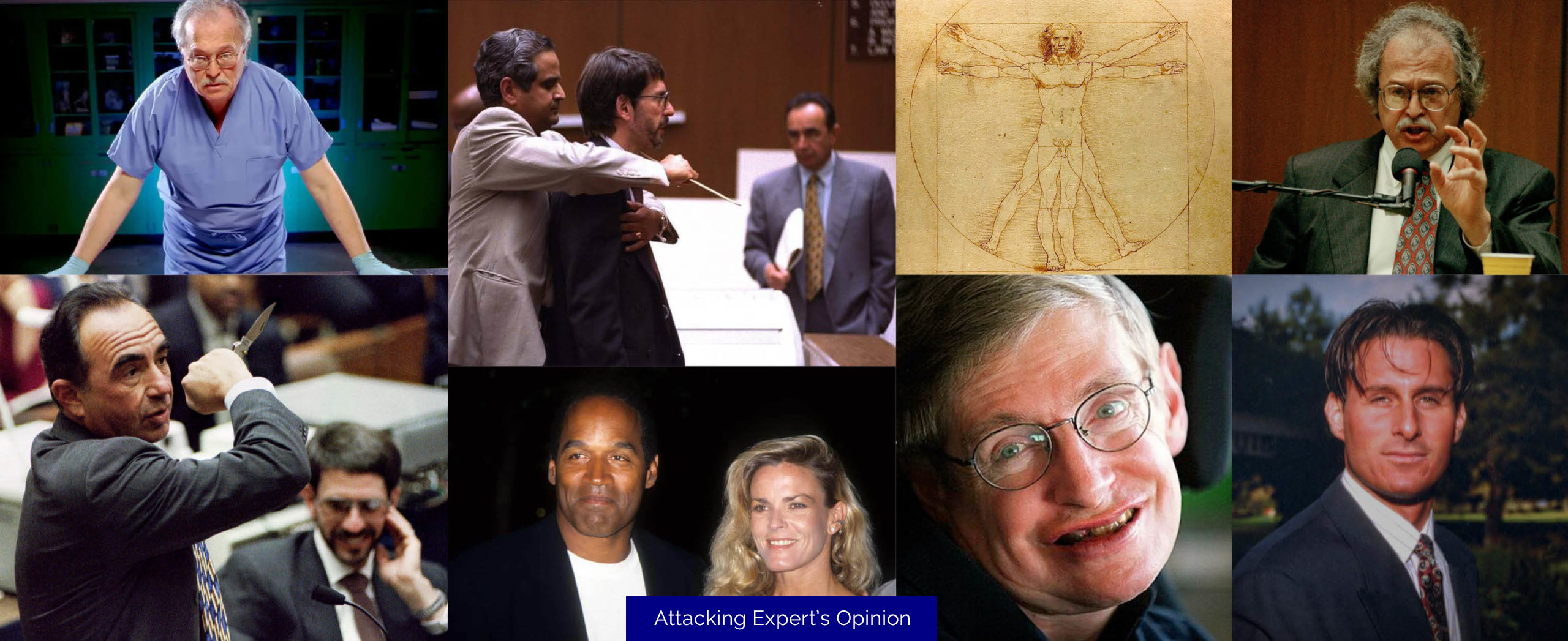
•Argument: Witness's memory was unreasonably poor ("I don't remember" ... the every-case, toughest answer to successfully attack).


2:50 p.m. - 3:00 p.m. BREAK


3:00 p.m. - 4:30 p.m.

•Argument: Witness's memory was unreasonably good.
•Argument: Witness was not reasonably motivated.
•Argument: Witness was not reasonably emotional.
•Argument: Witness's admission was necessity posing as virtue.

4:30 pm. ADJOURN


Return to Home Page

contact